


Ostenex™ Supportive Neck Pillow
Ostenex™ Supportive Neck Pillow
Dense foam cervical traction - restores natural neck curve in 10 minutes
Built for larger frames - maintains support under greater body weight
No power, no setup - passive gravity traction anywhere you rest
BUNDLE & SAVE
Couldn't load pickup availability

Ostenex™ Supportive Neck Pillow
- American express payment method
- Apple pay payment method
- Diners club payment method
- Discover payment method
- Google pay payment method
- Master payment method
- Paypal payment method
- Shopify pay payment method
- Visa payment method
 Free Shipping
 30-Day Money Back
 1-Year Warranty
📖 How to Use Ostenex™
📖 How to Use Ostenex™
Step 1 - Place on a Firm Surface
Set Ostenex™ on a bed, mat, or firm sofa with the curved support facing upward. Do not use it as an overnight pillow.
Step 2 - Lower Your Neck Onto the Curve
Lie back slowly so the highest point supports the natural curve of your cervical spine. Keep your shoulders relaxed and your head centered.
Step 3 - Start With 5-10 Minutes
Let your neck relax into the foam traction. Most users need 1-3 days to adapt, so begin with short sessions and increase only if comfortable.
Step 4 - Rise Slowly
Roll to your side before sitting up. Stop use if you feel sharp pain, dizziness, numbness, or unusual discomfort.
📦 Shipping Timeline
📦 Shipping Timeline
Processing Time: 1–3 business days.
Standard Shipping: 8–12 business days (Domestic & International).
Note: Delivery estimates may vary based on local logistics, customs clearance, or seasonal holidays.


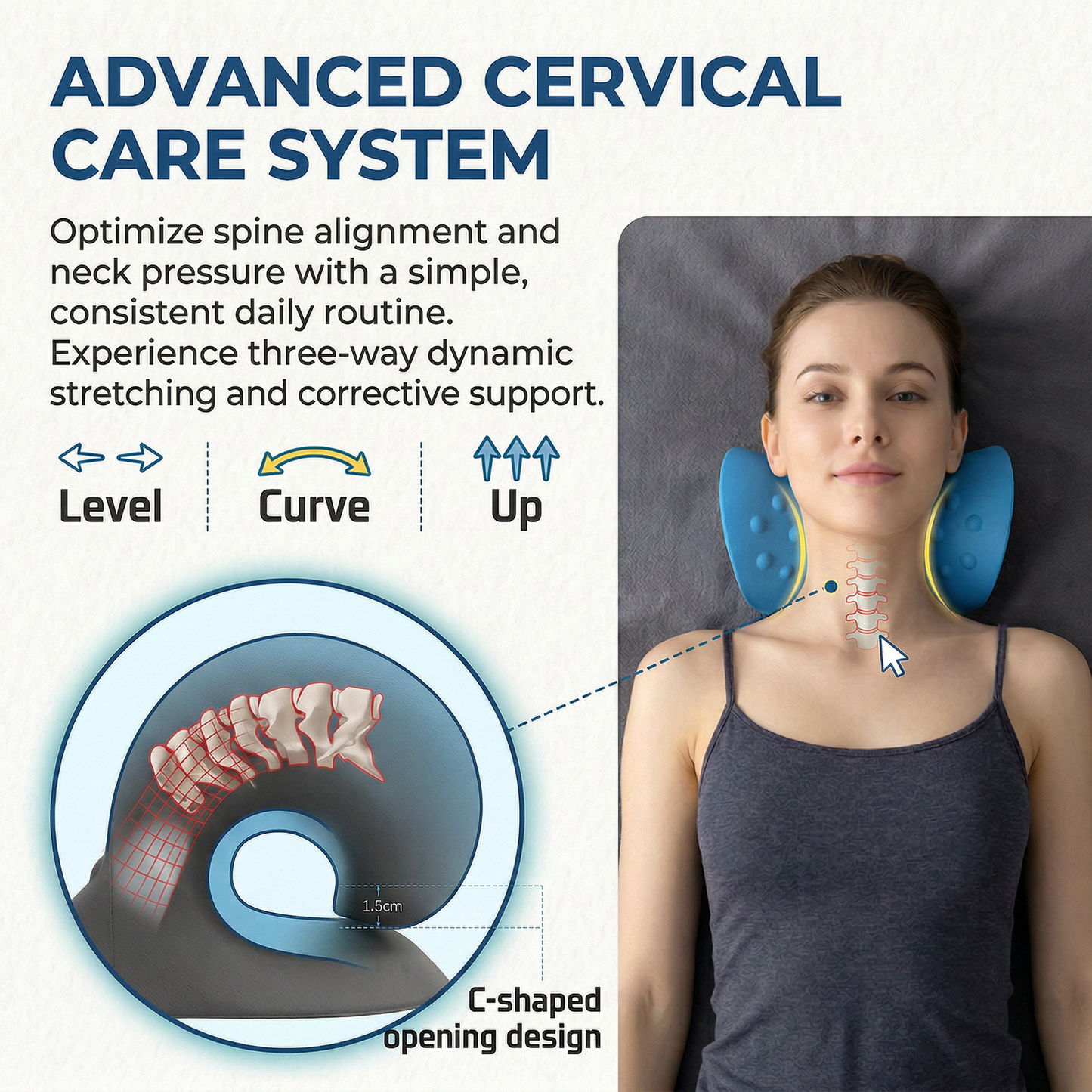
Neck pain that will not go away - because standard devices were never built for your frame
Standard cervical pillows and neck stretchers flatten immediately under heavier body weight, providing zero therapeutic benefit. Ostenex™ uses dense, high-firmness foam that maintains its height and traction depth regardless of body weight - giving larger adults the cervical decompression standard products cannot provide.
Dense memory foam - maintains its height under greater body weight where standard products fail
Passive cervical traction - the weight of your head creates natural decompression between vertebrae
Multiple weight options - choose light 220g for gentle stretch or 660g for deeper decompression
Result: Adults in larger body frames report meaningful improvement in neck stiffness and pain after 1 to 2 weeks of consistent daily use - with the 660g variant providing the strongest decompression for those with significant cervical compression.
Common questions
Everything you need to know about Ostenex™
How does Ostenex™ help relieve neck pain and stiffness?
How does Ostenex™ help relieve neck pain and stiffness?
Ostenex™ works through passive cervical traction: when the neck rests on the curved foam surface, the weight of the head creates gentle distraction between the cervical vertebrae. This decompression may help relieve pressure on compressed discs and irritated nerve roots that cause neck pain, headaches, and shoulder tension. The process also encourages restoration of the natural cervical lordosis that is lost from extended screen use and poor seated posture.
Is Ostenex™ suitable for larger adults and those over 40?
Is Ostenex™ suitable for larger adults and those over 40?
Yes, Ostenex™ was selected specifically for adults in larger body frames and those over 40 who have found standard cervical products insufficiently supportive. The dense foam construction maintains its height and firmness under greater body weight, ensuring consistent traction rather than flattening immediately. The range of weight options from 220g to 660g allows users to select the support depth that best matches their cervical anatomy.
How do I use Ostenex™ and for how long?
How do I use Ostenex™ and for how long?
Place Ostenex™ on a flat surface such as a bed, floor, or firm sofa cushion. Lower your neck onto the curved apex of the device so that the foam supports the natural curve of your cervical spine. Do not use for more than 5 minutes during your first session. Gradually increase session duration over 1 to 2 weeks up to a maximum of 15 to 20 minutes per session. Do not use as a regular sleeping pillow overnight.
What variants and weight options are available?
What variants and weight options are available?
Ostenex™ is available in 9 variants: single-unit colors (blue, black, purple, light green, pink, dark blue, butterfly-shaped) at 220g and $2.40, a medium combination at 440g, and a heavy combination at 660g and $10.59. The butterfly-shaped variant is 130g and provides a gentler entry-level stretch. All variants are foam-based with no power requirements.
How long until I notice improvement in neck pain?
How long until I notice improvement in neck pain?
Ostenex™ users commonly report an immediate sense of cervical decompression and muscular relaxation during the first 5-minute session. Meaningful improvement in chronic neck stiffness and daily pain levels is typically reported after 1 to 2 weeks of consistent daily use. Users with more severe compression or long-standing poor posture may require 3 to 4 weeks of regular sessions to notice significant changes.
Shop with Confidence
Every order is backed by our commitment to quality and your satisfaction.

30-Days Money Back
Full refund, no questions asked.

1-Year Warranty
Premium protection for your peace of mind.

Free Shipping
Free delivery on every order.

Secure Ordering
Safe & Secure Checkout